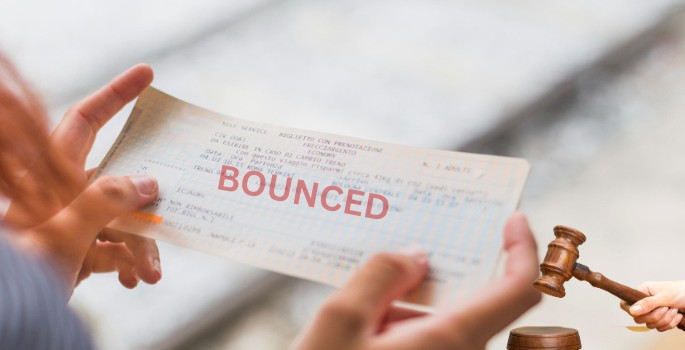

A bounced cheque is not just an embarrassment — it is a criminal offence. Section 138 of the Negotiable Instruments Act, 1881 gives the person who received the bad cheque a powerful legal remedy. But the clock starts ticking the moment the bank returns it.
The Law
What Exactly Does Section 138 Say?
Section 138 makes it a criminal offence for a person to issue a cheque that is returned unpaid by the bank due to insufficient funds or because the amount exceeds the credit arrangement with the bank. Introduced by amendment in 1988, the provision was designed to protect commercial trust — and to give teeth to what was previously just a civil dispute.
The punishment? Imprisonment up to two years, a fine up to twice the cheque amount, or both. Importantly, it is also a compoundable offence — meaning the parties can settle at any stage, including during an appeal, once the payment is made.
Important: Section 138 only applies when the cheque bounces due to insufficient funds. A cheque returned for a signature mismatch, stale date, or stop-payment instruction involves additional legal considerations and may not straightforwardly attract Section 138.
30 – Days to send demand notice
15 – Days for drawer to pay
30 – Days to file complaint
2× – Max fine (cheque amount)
Legal Elements
The 4 Things You Must Establish
A Section 138 complaint succeeds only when all of these are in place:
1.Cheque issued for a legally enforceable debt
The cheque must have been given to discharge an existing debt or liability — not as a gift, blank security, or future promise.
2. Presented to the bank within validity period
The payee must present the cheque within 3 months of its date. An expired cheque cannot ground a Section 138 complaint.
3. Returned unpaid — and a demand notice sent in time
The bank return memo is your starting gun. A written demand notice must reach the drawer within 30 days of that memo.
4. Payment not made within 15 days of notice
If the drawer pays after receiving the notice, no offence is committed. Failure to pay within 15 days triggers the right to file a criminal complaint.
Critical Deadlines
The Timeline — Miss One Step and You Lose Your Right
Section 138 is ruthlessly time-bound. Every deadline is mandatory, not optional.
Day 0 : Bank return memo received by payee
Within 30 Days : Send demand notice via registered post (RPAD)
+15 Days : Drawer’s window to make payment
+30 Days : Last date to file complaint before Magistrate
Do not wait: If you miss the 30-day window for sending the demand notice, your right to file a criminal complaint under Section 138 is extinguished. Courts have repeatedly held this timeline is mandatory.
Your Action Plan
What Should You Do the Moment a Cheque Bounces?
Step 1 — Collect the return memo immediately. Your bank will issue a Cheque Return Memo stating the reason for dishonour. This document is your most critical evidence and marks Day 0 of the legal timeline.
Step 2 — Consult a lawyer within the week. The demand notice must be carefully worded — errors here are exploited by the defence. A lawyer will draft it correctly and send it via registered post with acknowledgement due (RPAD), creating a paper trail of service.
Step 3 — Wait 15 days. If the drawer pays in full, the matter ends. No complaint, no court — the money is recovered. If they do not pay, you now have a right to proceed criminally.
Step 4 — File the complaint before the Judicial Magistrate. Within 30 days of the expiry of the notice period, your lawyer will file the complaint at the court having jurisdiction over your bank branch — along with the original cheque, return memo, demand notice, and postal receipts.
Settlement is always an option. Since Section 138 is a compoundable offence, the accused can pay the amount at any stage — even after conviction, during appeal — and the case can be settled. Most cheque bounce cases in India end in compounding rather than a conviction.
For the Accused
Received a Demand Notice? Here Is What You Should Know.
Being served a legal notice for a bounced cheque does not automatically mean conviction. Pay the amount within 15 days of receiving the notice and the offence is not committed — no complaint can be filed against you. If you believe the cheque was not issued for a legally enforceable debt, or that the notice was defective, consult a criminal lawyer immediately.
Under Section 139, courts presume that a cheque was issued for a legally enforceable debt. The burden is on you as the accused to rebut this presumption — and you must do so with credible evidence, not mere denial.
Key defence: If you can prove the cheque was a blank security cheque, or that the underlying debt did not exist or was already repaid, you have a strong case. Document everything — loan repayment receipts, WhatsApp conversations, and bank statements are your best tools.
The Cheque May Have Bounced. Your Rights Have Not.
Section 138 gives India’s payees one of the strongest legal remedies available for debt recovery — backed by the threat of criminal prosecution. But the law demands speed and precision. A missed deadline, a poorly worded notice, or the wrong court can derail an otherwise airtight case.
Whether you are the one holding a dishonoured cheque or the one who has received a demand notice — get legal advice immediately. The window is short, and every day counts.